
 English
 Español
 عربى
عربى русский
 Français

Home · Blog · Industry News · Heat Seal Aluminum Foil Guide: Types, Uses, and Selection Tips
Industry News
Heat Seal Aluminum Foil Guide: Types, Uses, and Selection Tips
Jul 17,2026Content
About 750 billion flexible packages are produced annually, and a significant fraction relies on heat seal aluminum foil laminates to achieve hermetic closure. The foil provides light, oxygen, and moisture barrier, but the heat seal layer is what bonds it to itself or to the container — a failure here means product spoilage, insulation loss, or medical device rejection. Choosing the right heat seal aluminum foil is not about thickness alone; it requires matching the sealant chemistry, activation temperature, and substrate compatibility to the demands of the filling line and the end-use environment.
Shrinkage, delamination, or inadequate peel strength often trace back to mismatched seal initiation temperatures or insufficient hot tack. This article breaks down the functional layers, material variants, and selection parameters that separate a robust seal from a costly recall.
How Heat Seal Aluminum Foil Works
Heat seal aluminum foil is not a monolith. It is a composite structure in which a thin aluminum foil — typically 6 to 30 µm — acts as the barrier core. On one side, a heat-activatable sealant layer is applied either by lamination or coating. When heat and pressure are applied during packaging, the sealant softens and fuses to the opposing substrate, creating a tight closure upon cooling.
The aluminum layer blocks gas and water vapor transmission, while the sealant handles bond formation. Seal initiation temperature (SIT) defines the point where the material begins to flow. For aseptic or retort processes, sealant chemistries must withstand sterilization temperatures up to 135°C without shifting or weakening. Common sealant resins include low-density polyethylene (LDPE), polypropylene (PP), ethylene vinyl acetate (EVA), and specialty hot-melt copolymers designed for specific thermal profiles.
Key Material Structures and Laminations
The performance envelope of a heat seal foil is set by its lamination architecture. The simplest is a two-layer: aluminum foil plus sealant. More demanding applications often use three or more layers, bonding the foil to paper, PET, or nylon for printability, stiffness, or additional puncture resistance. The adhesive tie layer — typically solvent-free polyurethane — must maintain integrity across the entire thermal cycle.
Critical parameters include:
- Foil gauge and temper (O-temper for deeper drawing, H18 for flat lidding)
- Sealant gauge and type (PE for low-temperature sealing, PP for autoclavable lids, hot-melt coatings for peelable seals)
- Presence of a primer or corona treatment on the foil to anchor the sealant
- Heat resistance of the external layer if secondary packaging or hot-filling occurs
Structures destined for pharmaceutical blister packs, for example, often combine high-temperature hot melt aluminum foil sandwiched with an outer PET layer that survives retorting without delamination.
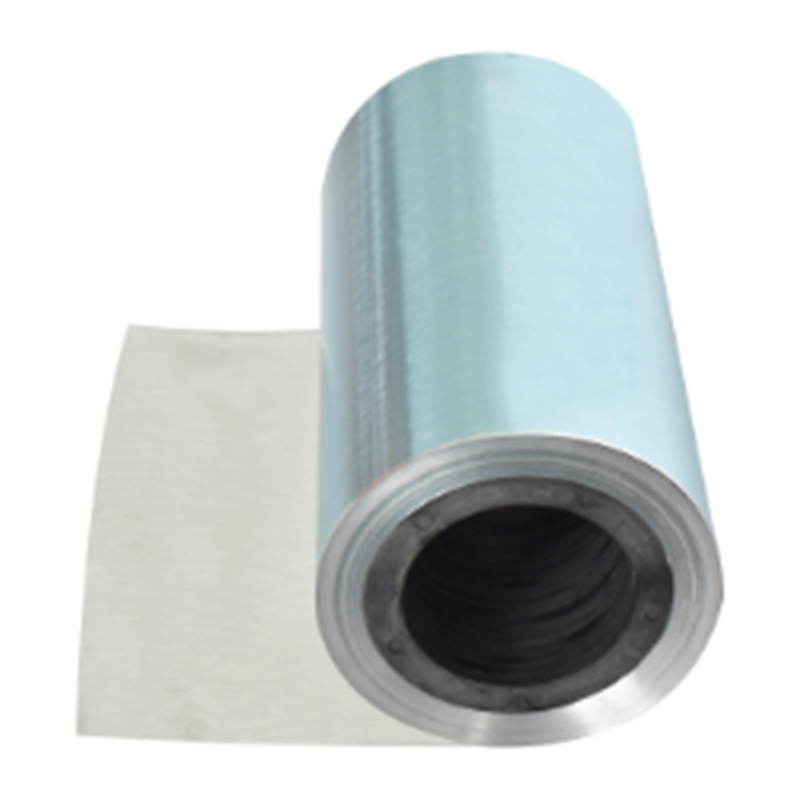
Types of Heat Seal Aluminum Foil
Ordinary Heat Seal Foil
This category uses a general-purpose PE or EVA sealant layer and operates at SITs between 105°C and 125°C. It suits dry food pouches, sachets, and non-retort medical device packaging. The self-adhesive heat seal aluminum foil variant incorporates a pressure-sensitive adhesive on one side, eliminating the need for a secondary heat source during initial placement, though final bonding still relies on thermal activation.
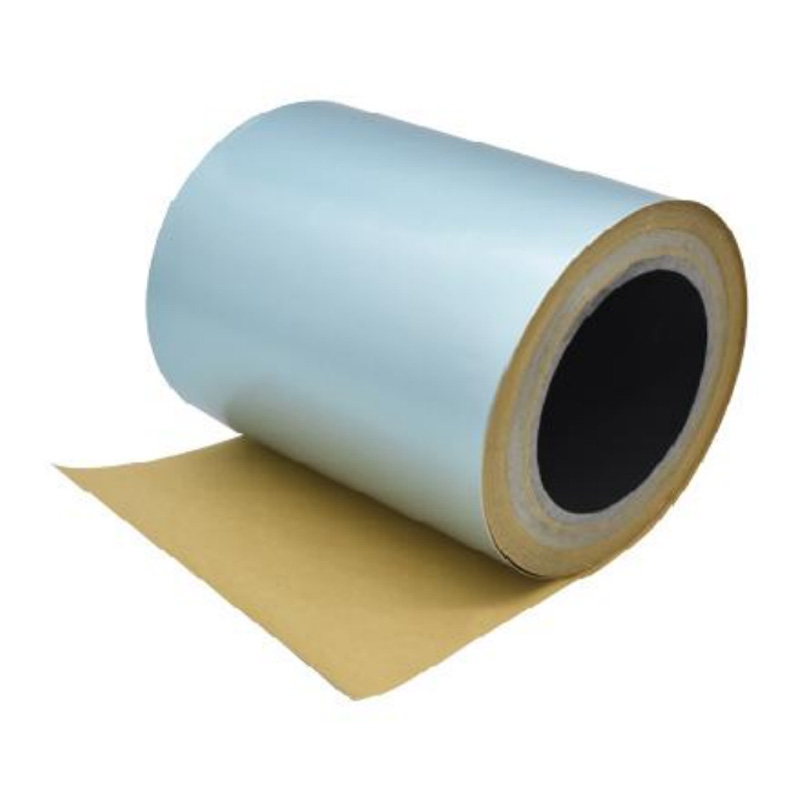
Printable Heat Sealable Foil
By adding a top-coated polyester or BOPP print layer, printable heat sealable foil allows high-resolution flexographic or rotogravure branding without compromising barrier. The print remains on the external surface, while the reverse side activates under heat — vital for portion-control condiment sachets and single-use cosmetic samples where aesthetic appeal drives consumer trust.
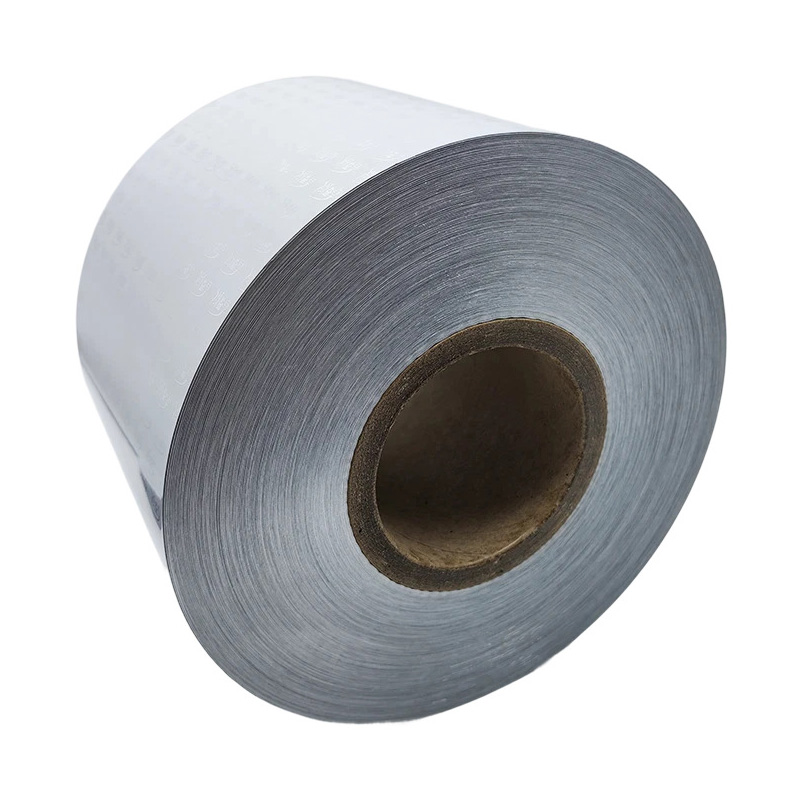
High-Temperature and Retort-Grade Foil
Sealants based on cast polypropylene or modified polyester enable continuous sealing at 140°C and short-duration retort at 121–135°C. These laminates are essential for pet food trays, ready-to-eat meal pouches, and surgical instrument wraps. Hot tack strength — the ability of the still-hot seal to resist opening forces during filling — often exceeds 2.5 N/15mm in well-designed retort structures.
Peelable Seal Foil
For consumer-friendly opening, blend technologies incorporate a dispersed incompatible phase within the sealant (often a polybutene component) that creates a cohesive failure mode. Peel force can be engineered between 4 N and 15 N per 15mm width, allowing easy opening without tearing the underlying foil.
Critical Performance Properties
When specifying heat seal aluminum foil, lab certificates should confirm these values:
| Property | Standard PE Seal | Retort PP/Hot-melt Seal |
|---|---|---|
| Seal Initiation Temp (°C) | 105 – 125 | 125 – 145 |
| Hot Tack (N/15mm) | 0.8 – 1.5 | 1.5 – 3.0 |
| Seal Strength (N/15mm, cooled) | 6 – 12 | 10 – 20 |
| Oxygen Transmission (cc/m²·day·atm) | <0.1 | <0.05 |
| Water Vapor Transmission (g/m²·day) | <0.1 | <0.05 |
Seal integrity under stress is not just about the averages. Pinholing from drawn seals, edge wicking, and creep at elevated storage temperatures degrade barrier performance long before visual failure appears. A proper seal integrity test (dye penetration, burst, or vacuum decay) is the only reliable pass/fail gate.
Industrial Applications
- Pharmaceutical and diagnostic: Blister lidding, strip packs, and transdermal patch pouches demand zero pinholes and validated seal strength after long-term aging.
- Food packaging: Retort pouches for tuna, pet food, and soups; lidding films for yogurt cups; butter wraps; and aseptic carton liners.
- Insulation and construction: Vapor-barrier facings for pipe insulation, HVAC duct wrap, and building envelope membrances where the foil's reflectivity plus a heat-sealable edge prevents moisture ingress.
- Electronics and cable shielding: Heat sealable foil tapes for shielding enclosures and cable wraps, often with a conductive adhesive layer.
- Medical device sterilization: Tyvek/foil laminate pouches that seal under low-temperature conditions to protect devices during EtO or gamma radiation sterilization.
Selection Criteria for Consistent Results
Start with the filling and sealing equipment parameters. Seal dwell time, jaw pressure profile, and ambient temperature all shift the required SIT. A foil that seals perfectly on a lab heat sealer may fail on a high-speed horizontal form-fill-seal line running at 80 cycles per minute. Always validate with production-representative samples.
Next, consider the packaged product. Fatty or acidic contents can swell the sealant. Cold-chain distribution may embrittle standard LDPE seal layers, causing fracture during handling. In such cases, a sealant with a glass-transition temperature well below -20°C is non-negotiable.
Finally, audit the total converted cost. A 9 µm foil with a higher-performance sealant may outperform a thicker but less stable cheaper option, reducing material usage and transport weight. The target seal strength and barrier requirements, not foil gauge alone, should drive the specification.
Contact Us
Your email address will not be published. Required field are marked*
News Categories
- Company News(2)
- Industry News(44)
- Exhibition News(1)
Product Category
- No. 59, Zhufeng Road, Nanshan Park, Economic and Technological Development Zone, Ningguo City, Anhui Province
- [email protected]
- +86 13865932464
- +86 563-267 3898
