
 English
 Español
 عربى
عربى русский
 Français

Home · Blog · Industry News · Printable Heat-Sealable Aluminum Foil: Printing & Selection | Gowins
Industry News
Printable Heat-Sealable Aluminum Foil: Printing & Selection | Gowins
Jul 24,2026Content
A packaging engineer recently contacted us after a printed logo on heat-sealable aluminum foil blistered during retort sterilization. The foil sealed correctly, but the print failed. This is the difference between generic foil and a foil engineered for both sealing and high-resolution printing. This guide explains what printable heat-sealable aluminum foil is, how printing affects sealing, and how to specify the right material for food, pharmaceutical, and cosmetic packaging—so you can avoid costly missteps.
We produce a range of printable heat-sealable foils, and the decisions go well beyond “sealable” vs. “non-sealable.” The interplay between print-receptive coatings, lamination, and heat-seal curves determines whether your pouch passes a burst test and looks professional on the shelf.
What Is Printable Heat-Sealable Aluminum Foil?
Printable heat-sealable aluminum foil is a multi-layer material built on a thin aluminum substrate. The inside—the side that will contact the product or form the seal—carries a heat-activated sealing lacquer. The outside is treated with a print-receptive coating that accepts inks from UV flexo, gravure, or digital presses without requiring corona treatment in most cases. This dual functionality eliminates the need for separate labels or overwraps.
The print coating is the critical differentiator. On standard heat-seal foil, the outer surface is bare metal or has a light conversion coating that repels ink. Our printable grades use a proprietary acrylic or polyester-based top coat that provides a bondable surface while remaining stable through the heat-seal cycle. As a result, you can run four-color process graphics, barcodes, and QR codes directly on the foil.
Understanding the types of heat-seal aluminum foil helps clarify where printable variants fit into a broader portfolio.
Types and Printing Compatibility
Choosing the right substrate starts with the printing technology you use and the mechanical stresses the package will face. We typically classify printable heat-sealable foils into two families, both available from our production lines.
Standard Printable Heat-Sealable Aluminum Foil
This construction consists of bare aluminum foil with a heat-seal lacquer on the inside and a print-receptive primer on the outside. It is compatible with UV-curable and solvent-based flexo and gravure inks. Because the foil itself acts as the barrier, package converters get the thinnest possible structure—ideal for high-speed horizontal form-fill-seal (HFFS) lines that demand low seal-initiation temperatures and fast dwell times.
The print surface delivers excellent ink adhesion and scratch resistance after curing. However, because the foil is not laminated, it is less tolerant of extreme mechanical abuse, such as repeated flexing in a child-resistant blister pack. For most single-serve food pouches and cosmetic sample sachets, standard foil performs reliably when the print run is straightforward and the seal area does not require a secondary film.
We recommend starting with our standard printable heat-sealable aluminum foil for UV flexo applications and brief heat-seal dwells below 200°C.
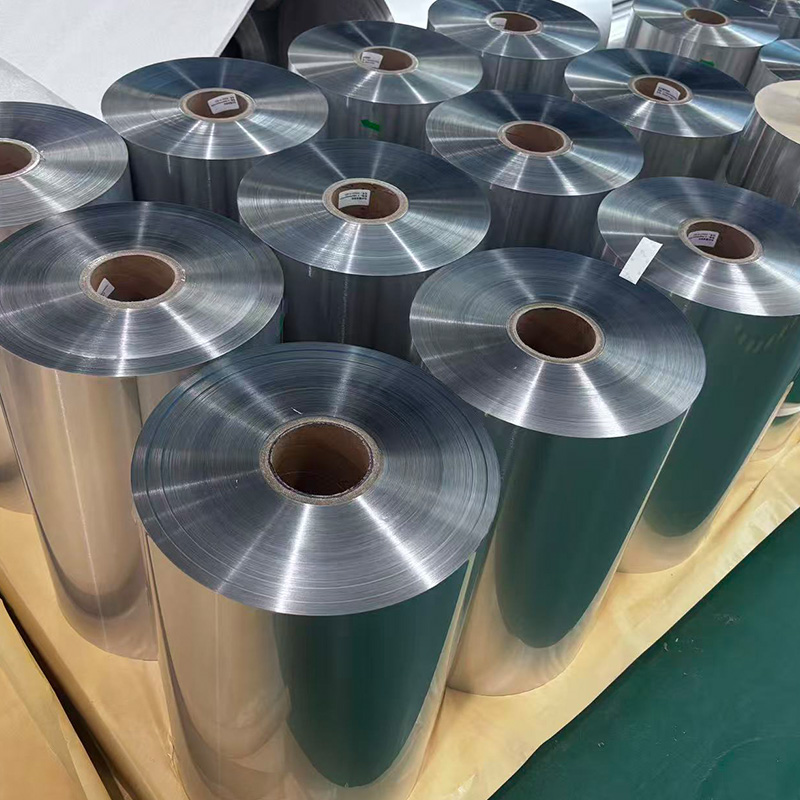 Heat Seal Pure Aluminum FoilOur pure aluminum fo...View Product →
Printable Heat-Sealable Laminated Aluminum Foil
Laminated versions add a polyester (PET) or polyolefin film layer to the outside of the aluminum foil, with the print coating applied on top of the film. This offers two major advantages: greater puncture resistance and a flatter surface for high-detail graphics. The film also protects the print from direct contact with hot sealing bars, which is particularly important when sealing temperatures exceed 220°C or dwell times extend beyond one second.
The trade-off is a slightly thicker total caliper, which can affect roll diameter on high-capacity reels. Yet for pharmaceutical blister lidding, laminated foil is often mandatory because the PET layer prevents micro-pinholes that could compromise moisture barrier. The how heat-seal temperature affects sealing performance becomes even more crucial here, because the print film layer acts as a thermal insulator that shifts the required jaw temperature upward by 10–15°C compared to bare foil.
If your application involves retort processing or requires a glossy, high-impact appearance, evaluate the laminated version for enhanced structural integrity.
Heat Seal Pure Aluminum FoilOur pure aluminum fo...View Product →Key Performance Parameters to Consider
Printability is worthless if the seal fails. When qualifying a printable heat-sealable foil, focus on these measurable criteria:
- Seal Strength (N/15mm): A minimum of 6 N/15 mm after a 0.5‑second dwell is standard for dry food pouches. For retort or vacuum packs, demand 8 N/15 mm or higher to survive pressure differentials.
- Heat-Seal Initiation Temperature: The temperature at which seal strength reaches 2 N. Lower initiation temperatures reduce energy consumption and protect heat-sensitive inks. Our standard coatings initiate around 110–120°C.
- Print Bond and Rub Resistance: After curing, ink should withstand at least 50 rubs with a Sutherland Rub Tester without noticeable removal. This is especially critical for pharmaceutical cartons that go through multiple handling points.
- Coefficient of Friction (COF): A controlled COF (0.3–0.5 static) prevents jamming on VFFS machines while allowing smooth film transport over printing rollers.
- Moisture Vapor Transmission Rate (MVTR): Aluminum foil inherently delivers near-zero MVTR, but lamination adhesives and print coatings can introduce minor pathways. Verify that the final structure stays below 0.1 g/m²/24 hr at 38°C/90% RH if moisture protection is critical.
When evaluating foils, request a printed sample that has undergone the full heat-seal cycle, because ink-to-lacquer compatibility can produce unexpected blistering or delamination only under combined stress. Many converters overlook this step, only to discover opaque blotches on the print after the pouch is filled.
Common Applications and Industry Use Cases
Printable heat-sealable aluminum foil appears wherever a package must block light, oxygen, and moisture while carrying clear information. Our customers across industries that commonly use pure aluminum foil have validated these applications:
- Food & Beverage: Single-serve coffee creamer lids, condiment sachets, and protein powder stick packs. The print surface accommodates ingredient lists and nutritional panels directly on the lid, saving one label operation.
- Pharmaceuticals: Blister lidding foils for tablets and capsules. The print coating must withstand autoclave sterilization without losing adhesion, a requirement that often pushes converters toward laminated variants.
- Cosmetics & Personal Care: Sample pouch foils for creams and serums. High-gloss print capable of reproducing fine text and metallic color shifts helps brands maintain a premium look while minimizing packaging weight.
- Industrial & Specialty: Wipe pouches containing alcohol or cleaning solvents demand a print coating resistant to aggressive chemistries. The right topcoat preserves legibility even after prolonged contact with contents.
In each case, the seal must be compatible with the product’s pH and oil content, and the print must survive the sterilization or filling process. A foil that prints beautifully on the reel can still delaminate inside a steam tunnel if the thermal expansion rates of ink, coating, and foil are mismatched.
How to Choose the Right Printable Heat-Sealable Foil for Your Project
Start by mapping your three most critical requirements: printing method, barrier performance, and mechanical durability. The table below summarizes how standard and laminated printable foils compare on the attributes that matter most in production.
| Property | Standard Printable Foil | Laminated Printable Foil |
|---|---|---|
| Printing methods | UV flexo, gravure, digital (with primer) | All standard methods; better for fine screens |
| Seal initiation temp. | 110–120 °C | 125–140 °C (film insulation) |
| Puncture resistance | Good | Excellent (PET layer) |
| Autoclave compatibility | Limited; risk of print blistering | Reliable with proper ink selection |
| Typical MVTR | <0.1 g/m²/24hr | <0.05 g/m²/24hr (film adds barrier) |
If your primary goal is to minimize material cost and seal speed for dry, low‑stress packaging, standard printable foil typically meets the need. If the package must survive a drop test, a prolonged sterilization cycle, or aggressive filling, the laminated option provides a wider safety margin. Because the film layer protects the print from direct contact with hot jaws, you also gain flexibility to run at higher sealing temperatures without print degradation.
Always test a printed, sealed, and conditioned sample under your actual line conditions. The interaction among your ink system, our top coat, and the heat-seal lacquer can only be fully evaluated on a production‑speed machine. We provide pre‑printed trial reels specifically for that purpose—contact our technical team to begin the validation.
Contact Us
Your email address will not be published. Required field are marked*
News Categories
- Company News(2)
- Industry News(45)
- Exhibition News(1)
Product Category
- No. 59, Zhufeng Road, Nanshan Park, Economic and Technological Development Zone, Ningguo City, Anhui Province
- [email protected]
- +86 13865932464
- +86 563-267 3898
